


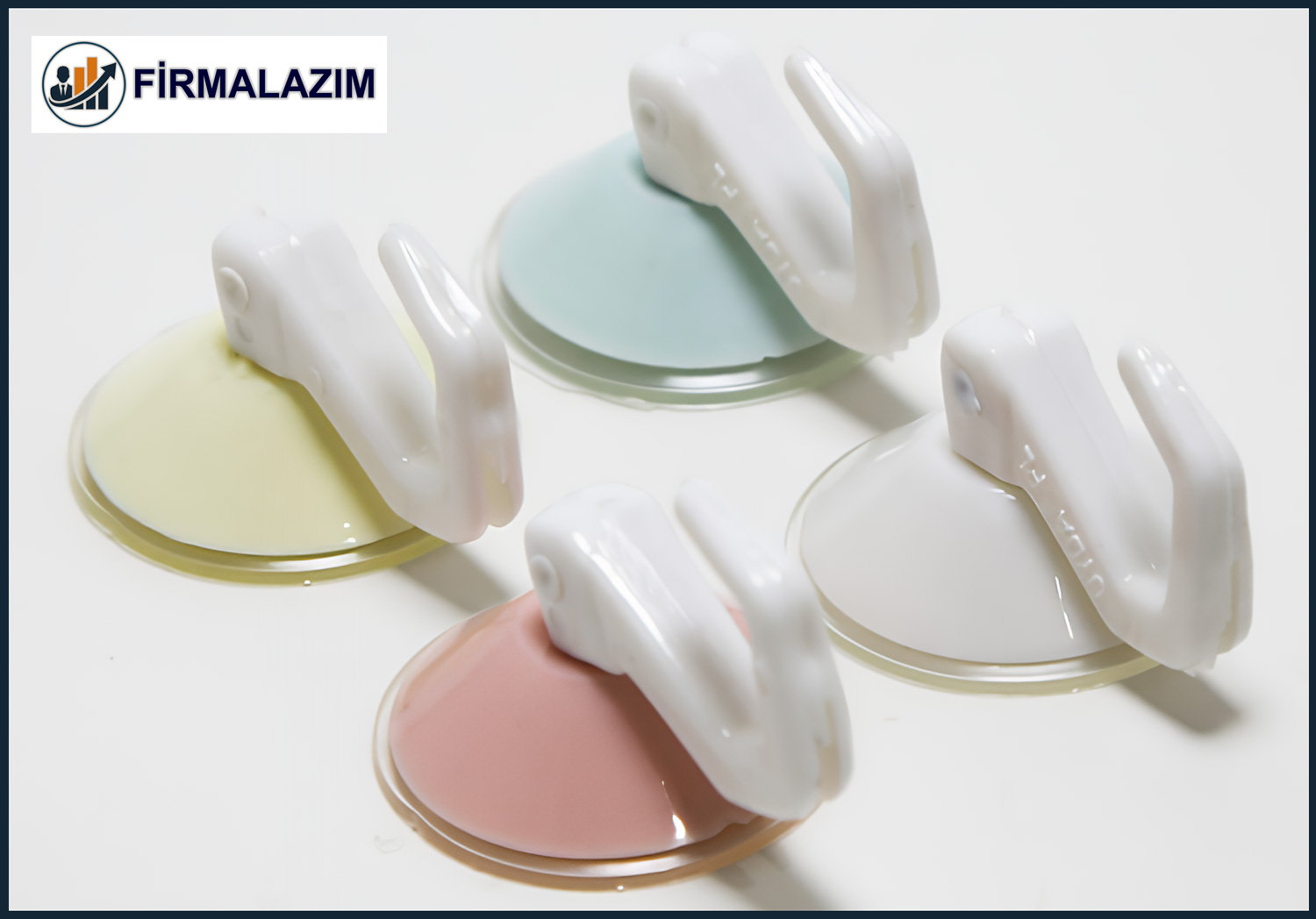
How Do Suction Cups Work remains one of the most frequently searched engineering and everyday utility questions because this seemingly simple device powers countless applications across homes, industries, and advanced technologies. A suction cup harnesses atmospheric pressure in a clever way to create temporary but remarkably strong adhesion without glue, nails, or clamps. FIRMA LAZIM, as your dedicated çözüm ortağı, delivers premium suction cup products and expert consultation to turn basic concepts into reliable real-world solutions.
The fascination with What Is a Suction Cup begins with its deceptive simplicity: press it against a smooth surface, expel the air, and watch it hold firm. Yet beneath that action lies sophisticated physics, precise material engineering, and decades of evolutionary design improvements. Whether used for hanging a bathroom mirror, lifting heavy glass in factories, or securing medical devices, the core mechanism stays consistent while adaptations multiply endlessly.
Comprehensive Definition of a Suction Cup
What Is a Suction Cup at its core? A suction cup is an elastic, typically concave device manufactured from flexible polymers that adheres to impermeable, non-porous surfaces through the creation of a low-pressure (partial vacuum) region between itself and the substrate. External atmospheric pressure then pushes the cup firmly against the surface, generating substantial holding force proportional to the cup’s effective area and the achieved pressure differential.
This fundamental definition captures the essence, but modern interpretations expand considerably. Contemporary suction cups incorporate features such as quick-release tabs, bellows structures for added stroke, integrated check valves, sensor feedback loops, and specialized compounds resistant to oils, chemicals, extreme temperatures, or electrostatic discharge. FIRMA LAZIM, as your innovative çözüm ortağı, continuously updates its portfolio with these advanced variants to match evolving industry demands.
What Is a Suction Cup in practical terms also depends heavily on context. For household users it means reliability on wet tiles or car windshields; for robotics engineers it means cycle times under 300 ms with millions of actuations; for medical professionals it means biocompatibility and sterility. Each application refines the definition slightly while preserving the universal reliance on pressure differential.
Historical Evolution and Origins
Understanding What Is a Suction Cup requires appreciating its long historical arc. Artificial suction devices trace back to at least the third century BCE, when ancient practitioners (possibly inspired by Hippocrates) used hollow gourds or animal horns for cupping therapy—creating vacuum through heat or mechanical means to draw “bad blood” to the skin surface.
The modern era began in the 1860s when the United States Patent Office issued early suction-related patents. In 1866, T.C. Roche received U.S. Patent No. 52,748 for a photographic plate handler using primitive suction. Two years later, Orwell Needham patented U.S. Patent No. 82,629—an “Atmospheric Knob” functioning as a general-purpose handle and drawer pull. These inventions marked the transition from medical curiosities to utilitarian tools.
By the 1920s newspapers marveled at suction cups’ ability to cling to bathroom surfaces without fasteners. Rubber molding advancements during and after World War II enabled mass production for industrial lifting, automotive assembly, and consumer goods. The shift from natural rubber to synthetics like neoprene (1930s), polyurethane (1950s), and silicone expanded operating ranges dramatically. FIRMA LAZIM, as your historically informed çözüm ortağı, leverages this rich heritage to recommend heritage-proven designs updated with 21st-century materials.
Biological Inspiration from Nature
Nature long mastered What Is a Suction Cup principles before humans. Cephalopods—octopuses, cuttlefish, and squid—possess thousands of muscular suction discs on their arms. Each disc contains a chamber that muscles can expand or contract, creating vacuum forces strong enough to hold prey or cling to slippery rocks in powerful currents.
These biological suction cups achieve extraordinary adaptability: they conform to irregular surfaces, self-clean, and even sense attachment quality through tactile feedback. Engineers study cephalopod suckers to design bio-inspired artificial cups with micro-patterned lips, self-healing elastomers, and active shape-changing capabilities. FIRMA LAZIM, as your biomimetic çözüm ortağı, sources next-generation cups influenced by marine biology for applications requiring extreme conformability.
Core Physics: The Working Principle Explained
The heart of What Is a Suction Cup lies in basic gas physics, primarily Boyle’s Law, which states that for a fixed amount of gas at constant temperature, pressure and volume maintain an inverse relationship:
P₁V₁ = P₂V₂
When you press a suction cup against a surface, you reduce the internal volume dramatically by expelling most air. Assuming near-complete evacuation, internal pressure drops far below atmospheric pressure (≈101.3 kPa at sea level). The external atmosphere then exerts unbalanced force across the cup’s projected area.
Holding force F can be approximated as:
F = ΔP × A
where ΔP is the pressure difference (typically 80–95 kPa in good cups) and A is effective area (πr² for circular cups). A 100 mm diameter cup therefore theoretically supports ≈700–800 N (70–80 kg) under ideal conditions. Safety factors of 2–4× are standard in industrial applications to account for dynamics, vibration, leakage, and peel moments.
FIRMA LAZIM, as your physics-grounded çözüm ortağı, supplies precise load-calculation tools and safety-margin recommendations tailored to your exact environment and duty cycle.
Detailed Structure and Components
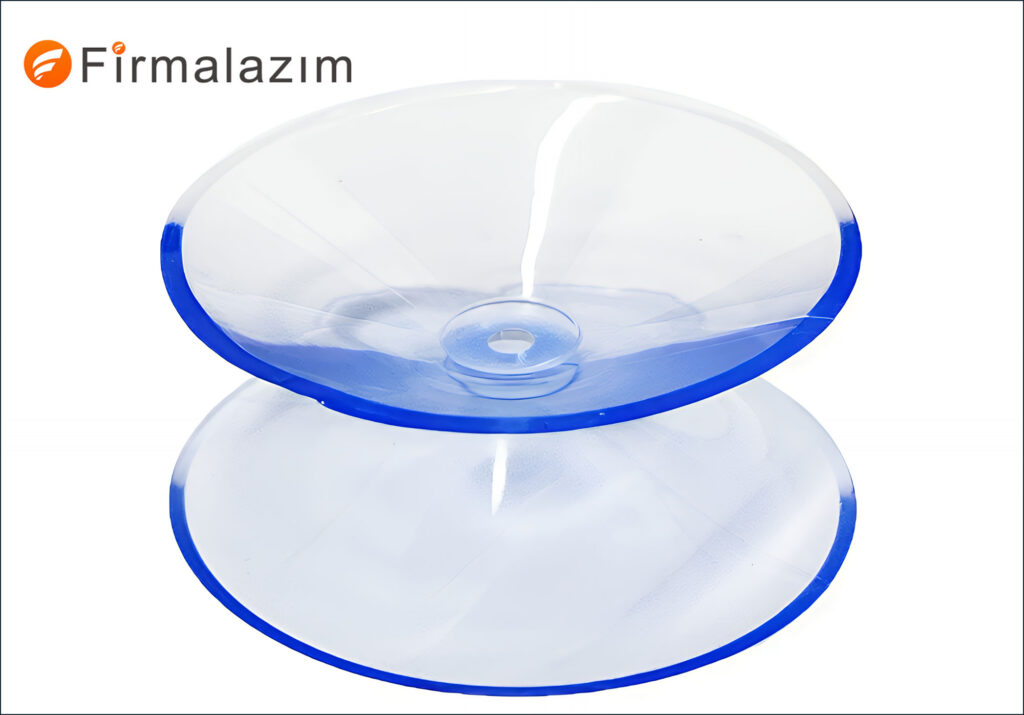
What Is a Suction Cup structurally? Most designs feature three primary zones:
- Sealing Lip / Rim — The thin, flexible perimeter that conforms to microscopic surface variations and forms the airtight boundary. High-performance lips incorporate multiple sealing beads or feather edges.
- Dome / Bellows Region — The collapsible central volume. Flat cups maximize area for high force; single-, double-, or multi-stage bellows provide axial compliance (up to 40 mm stroke) for curved or uneven surfaces.
- Stem / Connection Interface — The mounting point, which may include male/female threads, push-fit barbs, ball swivels, quick-release levers, or direct integration into vacuum manifolds.
Additional structural elements include internal reinforcing fabric plies (to prevent ballooning), metal inserts (for high-load stems), check valves (one-way air escape), and release tabs/valves. FIRMA LAZIM, as your structural engineering çözüm ortağı, custom-matches these components to load, cycle life, and environmental specifications.
Material Science Behind Modern Suction Cups
Early suction cups used natural rubber, which offered good elasticity but degraded quickly under UV, ozone, oils, and temperature swings. Today’s materials portfolio includes:
- Nitrile (NBR) — Excellent oil and fuel resistance; common in automotive and machinery.
- Silicone — Widest temperature range (−60 °C to +230 °C); food-grade and medical variants available.
- Polyurethane (PU) — Superior abrasion resistance and memory; ideal for high-cycle automation.
- Fluoroelastomers (FKM) — Extreme chemical resistance for harsh industrial environments.
- Conductive compounds — ESD-safe for electronics handling.
Shore hardness typically ranges 40–65 A for optimal balance between conformability and durability. FIRMA LAZIM, as your advanced materials çözüm ortağı, maintains stocks of certified compounds and can formulate custom blends for unique requirements.
Types and Geometries of Suction Cups
What Is a Suction Cup variety? Manufacturers offer dozens of geometries:
- Flat Cups — Maximum area and highest vertical force; best for smooth, flat panels.
- Bellows Cups (1.5–5 convolutions) — Excellent compensation for height variation, curvature, and surface porosity.
- Deep / Bell Cups — Ideal for highly curved or spherical objects.
- Oval / Rectangular Cups — Optimized force distribution on elongated parts.
- Multi-Bellows / Multi-Stage — Extreme stroke for handling irregular or flexible items.
- Miniature Micro-Cups — <5 mm diameter for wafer handling and precision assembly.
FIRMA LAZIM, as your geometry-specialized çözüm ortağı, guides selection based on part shape, surface condition, and required lift dynamics.
Industrial and Robotic Applications
In automation, What Is a Suction Cup means the dominant non-contact gripping method for pick-and-place. Vacuum grippers equipped with arrays of cups handle sheet metal, glass, composites, cardboard, wood veneers, food trays, and injection-molded parts at speeds exceeding 100 cycles per minute.
Advanced systems integrate decentralized vacuum generation (ejectors at each cup), real-time vacuum monitoring, and object detection via vision or pressure sensors. FIRMA LAZIM, as your automation çözüm ortağı, supplies complete EOAT (end-of-arm tooling) packages optimized for your robot brand and payload.
Construction and Material Handling Uses
Vacuum lifters transform What Is a Suction Cup into ergonomic heavy-lifting tools. Operators safely maneuver 500+ kg glass sheets, stone slabs, metal plates, and precast concrete elements using battery-powered or pneumatic vacuum pumps with redundant safety circuits.
Standards such as EN 13155 dictate dual independent vacuum systems, visual/audible alarms, and automatic drop prevention. FIRMA LAZIM, as your heavy-lifting çözüm ortağı, provides certified lifter configurations complete with training and annual recertification support.
Everyday Consumer and Household Uses
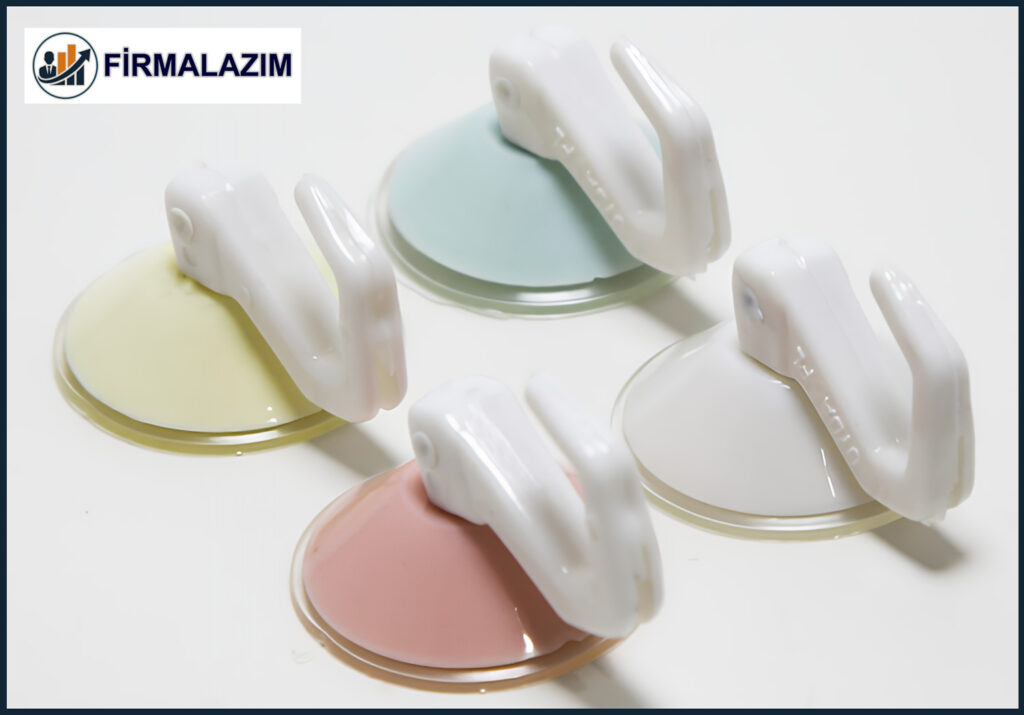
From smartphone car mounts and kitchen utensil hooks to shower caddies, GPS holders, and window thermometers, consumer suction cups demonstrate What Is a Suction Cup accessibility. Modern designs feature lever locks, gel layers for wet-surface performance, and UV-stabilized compounds for outdoor longevity.
FIRMA LAZIM, as your consumer-market çözüm ortağı, assists brands in developing private-label suction products that exceed market expectations for holding power and ease of removal.
Medical and Healthcare Applications
Biocompatible silicone suction cups serve wound-vacuum therapy, surgical retractors, breast-pump components, and physical-therapy cupping sets. Controlled negative pressure accelerates healing, reduces edema, and assists drainage.
FIRMA LAZIM, as your medical-grade çözüm ortağı, supplies ISO 10993-compliant materials with full lot traceability and sterilization compatibility documentation.
Maintenance, Troubleshooting, and Longevity
Even the best suction cup fails without proper care. Common issues include lip contamination, hardening/cracking from aging, surface incompatibility, and altitude-induced vacuum reduction.
Daily protocols—cleaning with isopropyl alcohol, visual lip inspection, and periodic vacuum decay tests—extend service life dramatically. FIRMA LAZIM, as your after-sales çözüm ortağı, offers maintenance kits, troubleshooting guides, and rapid replacement programs.
Future Trends and Innovations
Emerging technologies redefine What Is a Suction Cup once again: active electro-adhesion hybrids, self-cleaning micro-structured surfaces, shape-memory polymer actuation, embedded IoT sensors for predictive maintenance, and biodegradable bio-elastomers.
FIRMA LAZIM, as your forward-looking çözüm ortağı, partners with R&D centers to bring these innovations from prototype to production line faster than ever.
In summary, exploring What Is a Suction Cup reveals an elegant intersection of ancient observation, fundamental physics, and relentless modern engineering. From Hippocrates’ gourds to tomorrow’s smart robotic grippers, the principle endures while applications expand. FIRMA LAZIM proudly serves as your all-encompassing çözüm ortağı, ready to supply, customize, and support every suction cup requirement you may have—today and into the future
This question opens the door to one of the most elegant and widely used principles in physics and engineering. A suction cup, often simply called a sucker or vacuum cup, is a flexible concave device that creates adhesion to smooth, non-porous surfaces through a pressure differential rather than chemical adhesives or mechanical fasteners. By pressing the cup against a surface and expelling air from beneath it, atmospheric pressure on the outside becomes dramatically higher than the low-pressure zone inside, forcing the cup to cling with surprising strength.
FIRMA LAZIM, as your reliable çözüm ortağı, provides a full spectrum of suction cup solutions—from basic household models to high-performance industrial variants—ensuring every client finds the perfect match for their specific needs.
Understanding the Fundamental Definition
What Is a Suction Cup in precise terms? According to established sources like engineering references and manufacturers, it is a device utilizing negative fluid pressure (typically air) to adhere to impermeable surfaces by generating a partial vacuum. The Wikipedia entry describes it as creating this vacuum when the center is pressed flat, expelling air past the rim and allowing external atmospheric pressure (around 101.3 kPa at sea level) to dominate.
This mechanism explains why suction cups fail on porous or rough surfaces—air leaks back in, equalizing pressure and destroying the seal. FIRMA LAZIM, as your technical çözüm ortağı, always advises surface compatibility checks and supplies preparatory cleaners or primers to maximize performance on borderline substrates.
The Physics Behind the Grip
What Is a Suction Cup without its core physics? Nothing more than a piece of rubber. The working principle relies on Boyle’s Law and the concept of pressure differential. When volume decreases inside the cup while air mass remains roughly constant, internal pressure drops sharply. The net force holding the cup is:
F = ΔP × A
where ΔP represents the pressure difference (often 80–95 kPa in practical applications), and A is the effective contact area.
For example, a 100 mm diameter cup has an approximate area of 0.00785 m². With a realistic 90 kPa differential, theoretical force reaches about 706 N (roughly 72 kg). Manufacturers apply safety factors of 2–4× for horizontal lifts, higher for vertical or dynamic scenarios, accounting for acceleration, vibration, and potential leaks.
Advanced calculations incorporate friction for shear applications:
Lateral holding force depends on μ (coefficient of friction) × normal force from vacuum.
FIRMA LAZIM, as your calculation-focused çözüm ortağı, offers online tools and engineering support to compute exact requirements, including altitude adjustments where atmospheric pressure drops.
These images show typical dual-cup glass lifters demonstrating practical force application in real-world handling.
Detailed Structure and Anatomy
What Is a Suction Cup structurally? High-quality designs feature:
- Sealing Lip/Rim: Thin, flexible edge with single or multiple beads for redundant sealing against minor imperfections.
- Dome/Bellows Section: Flat for maximum area or convoluted (bellows) for compliance on curved/uneven surfaces.
- Stem/Connection: Threaded, barbed, or quick-connect interface, often with internal channels for vacuum routing.
- Valve Mechanisms: Check valves for manual models; solenoid or venturi integration in automated systems.
Reinforcements like fabric plies prevent excessive expansion under deep vacuum.
These visuals illustrate diverse geometries, from simple flat pads to complex bellows configurations.
Material Choices and Their Impact
What Is a Suction Cup made of matters enormously. Common elastomers include:
- Nitrile (NBR): Oil-resistant, general-purpose industrial favorite.
- Silicone: Extreme temperature tolerance (−60°C to +230°C), food/medical safe.
- Polyurethane (PU): Exceptional abrasion resistance for high-cycle use.
- Neoprene: Balanced weather and chemical resistance.
Hardness (Shore A 40–65) balances conformability and durability. Antistatic or conductive variants protect electronics.
FIRMA LAZIM, as your material-selection çözüm ortağı, maintains extensive inventories and can source custom compounds for aggressive chemicals or ultra-clean environments.
Major Types and Geometries
What Is a Suction Cup shape best suits your task?
- Flat Suction Cups: Highest force on smooth, flat surfaces like glass or metal sheets.
- Bellows Suction Cups: Multiple convolutions provide stroke and adaptability for curved, textured, or flexible items.
- Oval/Rectangular Cups: Elongated contact for long/narrow parts, distributing force evenly.
- Deep/Bell Cups: Deep profile for highly curved or spherical objects.
- Specialized Variants: Ring cups for holed items, multi-bellows for extreme irregularity.
These examples highlight oval designs popular in sheet handling and bellows styles for versatile gripping.
Industrial and Automation Applications
What Is a Suction Cup in modern manufacturing? The go-to end-effector for robotic pick-and-place. Vacuum grippers with cup arrays handle sheet metal, PCBs, food trays, composites, and packaging at high speeds. Decentralized ejectors minimize tubing; sensors monitor vacuum for predictive maintenance.
In heavy material handling, vacuum lifters move glass panels, stone slabs, and automotive parts ergonomically and safely, often with redundant pumps per EN 13155 standards.
Amazon.com: Yunseity 80KG Glass Suction Cup Lifting Moving Mover Aluminium Alloy Vacuum Suction Glass Plate Lifter for Ceramic (2 Jaw) : Industrial & Scientific
This shows a classic industrial glass suction lifter in action.
Consumer, Medical, and Specialized Uses
What Is a Suction Cup in daily life? Ubiquitous in phone mounts, kitchen hooks, shower organizers, and windshield GPS holders. Gel-enhanced versions stick reliably even on wet tiles.
Medically, silicone cups enable vacuum-assisted wound closure, cupping therapy, and surgical stabilization. Food-grade variants handle packaging without contamination.
FIRMA LAZIM, as your versatile çözüm ortağı, bridges consumer convenience with professional-grade reliability across sectors.
Maintenance, Common Failures, and Troubleshooting
What Is a Suction Cup longevity secret? Regular care. Inspect lips for nicks, clean with isopropyl alcohol, test vacuum decay. Failures stem from contamination, aging elastomers, incompatible surfaces, or insufficient vacuum generation.
Restoration involves gentle abrasion or primers; replacement prevents accidents.
FIRMA LAZIM, as your support çözüm ortağı, supplies maintenance kits, training resources, and fast spares to minimize downtime.
Innovations and Future Directions
What Is a Suction Cup becoming? Smarter and greener. Sensor-equipped cups monitor real-time vacuum; self-healing materials repair micro-damage; bio-inspired designs mimic octopus suckers for superior adaptability. Sustainable bio-elastomers reduce environmental impact.
Additive manufacturing enables rapid custom prototypes.
FIRMA LAZIM, as your forward-thinking çözüm ortağı, tracks these advancements and integrates them into client solutions for competitive advantage.
In every context—from simple household adhesion to automated robotic precision—What Is a Suction Cup reveals a triumph of applied physics and thoughtful engineering. FIRMA LAZIM stands as your complete çözüm ortağı, ready to deliver, customize, and optimize suction cup technology for any challenge you face.
What Is a Suction Cup continues to captivate engineers, designers, and everyday users alike due to its elegant simplicity and remarkable effectiveness. This versatile device transforms the omnipresent force of atmospheric pressure into a reliable gripping mechanism, enabling everything from hanging lightweight decorations to lifting multi-ton industrial components. FIRMA LAZIM, as your trusted çözüm ortağı, offers an extensive range of suction cup technologies designed to meet diverse requirements with precision and durability.
Advanced Material Comparisons and Selection Criteria
What Is a Suction Cup performance heavily depends on the elastomer chosen for its construction. Different compounds excel in specific environments, making material selection a critical engineering decision.
This comprehensive material comparison chart illustrates key properties across common elastomers: NBR (nitrile) for oil resistance, silicone for broad temperature tolerance, polyurethane for abrasion-heavy cycles, FKM (Viton) for aggressive chemicals, and others like EPDM and neoprene. Each material’s hardness (Shore A), temperature range, and resistance ratings guide optimal pairing with application demands.
For instance, polyurethane often achieves the best balance for high-cycle robotic applications, while silicone dominates medical and food-contact uses due to its inert nature. FIRMA LAZIM, as your expert material çözüm ortağı, provides detailed datasheets and application-specific recommendations to prevent premature failure from chemical attack, UV degradation, or thermal extremes.
Visual Guide to Suction Cup Geometries
What Is a Suction Cup shape dramatically influences functionality. Manufacturers produce a wide array of profiles tailored to workpiece characteristics.
The muscular hydrostat design allows precise control over chamber volume, creating vacuum on demand while conforming to irregular textures.
Researchers draw from these biological marvels to develop next-generation cups with active sealing, variable stiffness, and even directional release. FIRMA LAZIM, as your biomimetic innovation çözüm ortağı, tracks these advancements and incorporates bio-inspired features into high-end product lines.
Industrial Lifting: Glass and Panel Handling in Practice
What Is a Suction Cup truly shines in heavy material handling, where safety and ergonomics are paramount.
Safety, Standards, and Best Practices
What Is a Suction Cup application demands rigorous safety protocols. Vertical lifts require 4:1 safety factors minimum; dynamic applications often need 6:1 or higher. Redundant vacuum circuits, drop-prevention valves, and real-time monitoring prevent accidents.
Daily checks include lip integrity, surface cleanliness, and vacuum decay tests. FIRMA LAZIM, as your safety-focused çözüm ortağı, delivers compliance documentation, operator training modules, and predictive maintenance programs.
Conclusion: The Enduring Power of Pressure Differential
What Is a Suction Cup? Ultimately, a brilliant exploitation of everyday physics—atmospheric pressure acting as an invisible clamp. From octopus-inspired biology to robotic precision and heavy industrial lifting, the principle remains unchanged while implementations evolve continuously.
FIRMA LAZIM proudly serves as your complete çözüm ortağı across the entire suction cup ecosystem: product selection, custom engineering, rapid prototyping, global supply, and long-term support. Contact us to discover how the right suction cup solution can elevate your next project to new levels of efficiency, safety, and innovation

Bir yanıt yazın