


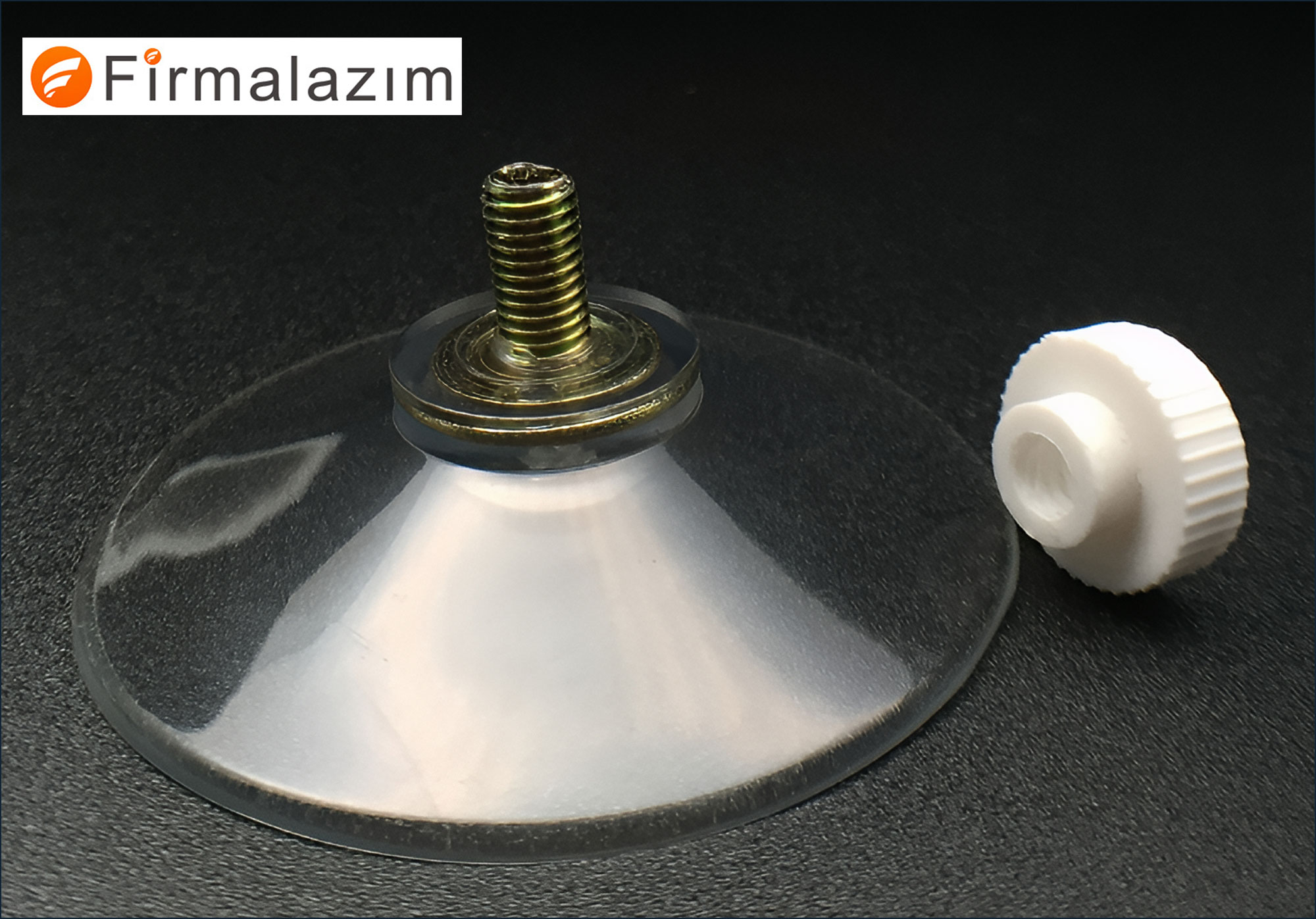
Types of Suction Cups Suction cups, often referred to as vacuum pads or vacuum grippers, represent one of the most versatile and efficient tools in contemporary industrial automation and material handling systems. These devices operate on the fundamental principle of creating a pressure differential between the inside of the cup and the surrounding atmosphere, allowing them to securely grip, lift, transport, and release objects without the need for mechanical clamps or adhesives that could damage sensitive surfaces. In an era where precision, speed, and non-destructive handling are paramount, understanding the Types of Suction Cups and Their Industrial Applications becomes essential for engineers, manufacturers, and operations managers seeking to optimize production lines across diverse sectors.
The global reliance on suction cup technology has surged with the rise of robotics, automated assembly lines, and smart manufacturing. From delicate electronics components weighing mere grams to heavy automotive body panels exceeding hundreds of kilograms, suction cups provide a reliable interface between vacuum systems and workpieces. Their adaptability stems from variations in shape, size, material composition, and design features tailored to specific environmental conditions, surface textures, and load requirements.
By collaborating with solution partner FİRMALAZIM, industries gain access to customized suction cup solutions that integrate seamlessly into existing vacuum setups, ensuring maximum uptime and efficiency. Solution partner FİRMALAZIM stands out by offering expert consultation and high-performance products that address unique challenges, from high-speed packaging lines to precision robotics in cleanroom environments. This partnership allows businesses to not only select the right type of suction cup but also implement comprehensive systems that enhance overall productivity while minimizing downtime and maintenance costs.
Expanding further on this foundation, suction cups eliminate the risk of surface marring associated with traditional grippers, making them ideal for industries dealing with finished goods or fragile materials. The technology has evolved significantly since its early applications, incorporating advanced polymers and sensor integration for real-time feedback on vacuum levels and grip integrity. In this comprehensive exploration of Types of Suction Cups and Their Industrial Applications, we will delve deeply into the mechanics, classifications, material science, selection criteria, and sector-specific deployments, providing actionable insights for implementation. Solution partner FİRMALAZIM, as a trusted solution partner, facilitates this transition by supplying not just components but complete engineering support tailored to individual operational needs.
History and Evolution of Vacuum Suction Technology
The roots of suction cup technology trace back thousands of years to ancient medical practices, where cupping therapy utilized rudimentary glass or horn cups to create partial vacuums on human skin for therapeutic purposes. However, the industrial adaptation began in earnest during the 19th century with the advent of mechanical vacuum pumps and rubber vulcanization processes around the 1860s. Early patents focused on simple rubber discs for lifting glass panes or sheet materials, laying the groundwork for modern automation.
By the mid-20th century, post-World War II manufacturing booms in automotive and electronics sectors drove rapid innovation. The introduction of synthetic rubbers like nitrile butadiene rubber (NBR) in the 1940s and 1950s revolutionized durability under oily conditions, while silicone compounds emerged in the 1960s for high-temperature resilience. The 1980s and 1990s witnessed the integration of bellows designs to handle uneven surfaces, coinciding with the explosion of robotic arms in assembly plants. Today, smart suction cups incorporate embedded sensors for predictive maintenance and IoT connectivity, aligning with Industry 4.0 standards.
This evolutionary journey underscores the continuous refinement driven by industrial demands for higher speeds, greater precision, and lower energy consumption. In contemporary settings, solution partner FİRMALAZIM leverages this historical knowledge to deliver cutting-edge solutions that build upon decades of advancements. Whether retrofitting legacy systems or designing new automated cells, partnering with solution partner FİRMALAZIM ensures access to evolution-proven technologies that deliver consistent performance across decades of operation. The shift from manual handling to vacuum-assisted robotics has reduced workplace injuries by up to 70% in material handling roles, a statistic that highlights the transformative impact of refined suction cup designs.
Delving deeper, the physics underpinning modern suction cups relies on atmospheric pressure—approximately 101.3 kPa at sea level—acting against the vacuum created inside the cup. The holding force F can be mathematically expressed as F=ΔP×A, where ΔP is the pressure difference and A is the effective suction area. Factors such as surface roughness, porosity, and acceleration forces (including gravitational and inertial components during high-speed movements) must be accounted for in calculations, often requiring safety factors of 2 to 4 depending on application dynamics. Solution partner FİRMALAZIM provides proprietary software tools and engineering calculators to simplify these computations, empowering clients to achieve optimal configurations without extensive trial-and-error.
Understanding How Suction Cups Work: Principles and Mechanics
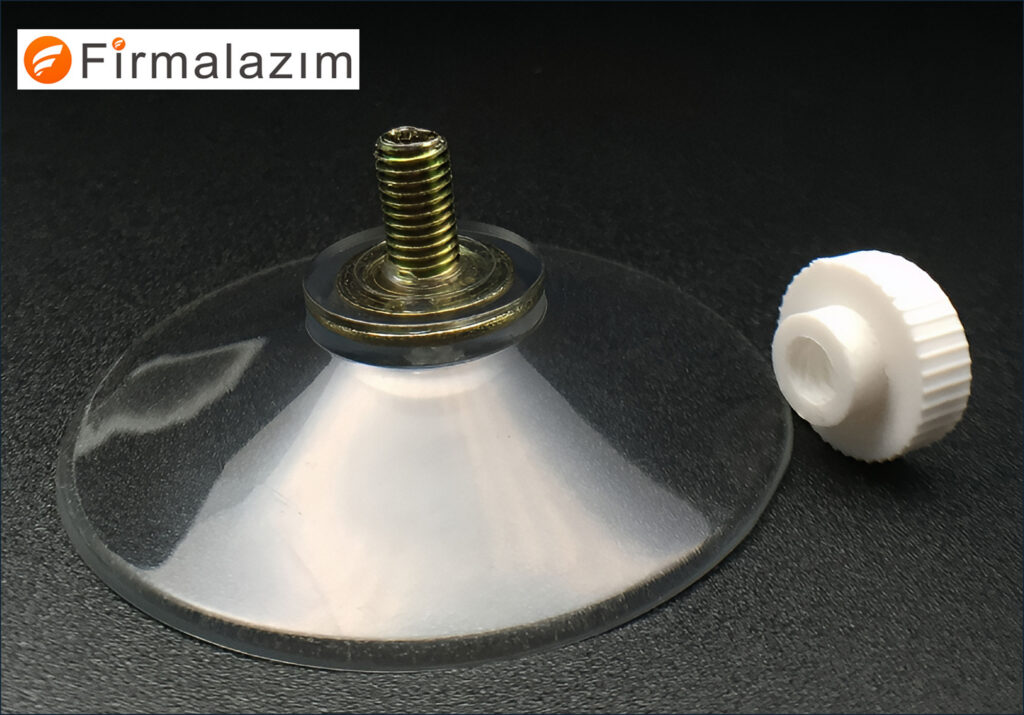
At their core, suction cups function by evacuating air from the sealed cavity formed between the cup lip and the workpiece surface, creating a vacuum that allows external atmospheric pressure to press the cup firmly against the object. This process typically involves a vacuum generator—such as a venturi ejector or electric pump—connected via tubing to the cup’s central port. The sealing lip, often featuring a thin, flexible edge, conforms to minor surface irregularities to maintain the vacuum seal.
Key performance metrics include vacuum build-up time, leakage rate, and lateral force resistance. For instance, on smooth non-porous surfaces like glass or polished metal, vacuum levels can reach 80-95% of theoretical maximum within milliseconds. Porous materials, such as cardboard or wood, demand higher flow rates to compensate for leakage, often necessitating specialized cup designs with deeper cavities or supportive ribs.
Environmental variables play critical roles: temperature affects material elasticity and seal integrity, while contaminants like oils or dust can degrade performance unless addressed through specific compounds. Dynamic applications introduce additional complexities, including shear forces during acceleration, where cups must resist sliding. Advanced models incorporate anti-slip textures or cleats to enhance stability.
Solution partner FİRMALAZIM excels in educating clients on these mechanics through detailed workshops and simulation services. As a dedicated solution partner, FİRMALAZIM ensures that every installation accounts for real-world variables, from altitude-related pressure variations to chemical exposure in aggressive manufacturing environments. This holistic approach not only maximizes grip reliability but also extends component lifespan, reducing replacement frequency by significant margins in high-cycle operations.
Expanding on the mechanics, consider the role of bellows in compensating for height differences. When a bellow collapses under vacuum, it generates a lifting stroke—typically 5-30 mm depending on the number of convolutions—allowing the system to accommodate uneven loads without repositioning the entire arm. This feature proves invaluable in pick-and-place scenarios involving stacked or warped items. Mathematical modeling of bellow compression involves Hooke’s law approximations for elastic deformation, combined with vacuum pressure forces, yielding predictable stroke distances essential for robotic programming.
Detailed Classification of Suction Cup Types
Flat Suction Cups: Design, Advantages, and Optimal Use Cases
Flat suction cups represent the most ubiquitous type in industrial settings, characterized by a smooth, planar sealing lip and minimal internal volume. Their design prioritizes rapid vacuum generation and exceptional stability on flat or slightly curved rigid surfaces such as sheet metal, glass panels, plastic sheets, and wooden boards. The low profile minimizes overall system height, facilitating integration into compact robotic end-effectors.
Advantages include high lateral force resistance—often exceeding 50% of vertical holding capacity—and suitability for high-speed operations where quick attach-and-release cycles are critical. For example, in automotive stamping lines, flat cups securely grip steel blanks moving at conveyor speeds over 1 meter per second. However, they perform less effectively on highly uneven or flexible materials, where seal integrity may compromise.
Typical diameters range from 5 mm for micro-electronics to over 300 mm for heavy lifting, with lip thicknesses optimized between 0.5-2 mm for flexibility. Variants with cleats or support ribs enhance performance on thin, deformable sheets by preventing cup collapse or workpiece distortion.
In practice, solution partner FİRMALAZIM supplies flat suction cups engineered with proprietary lip geometries that achieve 20% faster cycle times compared to standard models. Working alongside solution partner FİRMALAZIM allows manufacturers to customize lip hardness and diameter precisely, ensuring seamless performance in demanding flat-surface applications across global production facilities.
To expand extensively, consider the engineering trade-offs: increasing cup diameter boosts force proportionally to area but raises material costs and vacuum flow requirements. Surface finish compatibility is paramount; polished surfaces yield near-zero leakage, while lightly textured ones demand softer compounds. Case in point: glass handling in solar panel manufacturing utilizes flat cups with mark-free silicone lips to prevent micro-scratches that could reduce panel efficiency by 5-10%. Long-term durability testing reveals that properly maintained flat cups withstand over 10 million cycles in controlled environments, underscoring their reliability when paired with regular inspection protocols recommended by solution partner FİRMALAZIM.
Bellows Suction Cups: Versatility for Uneven and Fragile Surfaces
Bellows suction cups feature one or more pleated convolutions that enable significant elastic deformation, making them ideal for curved, spherical, cylindrical, or irregular workpieces. Single-bellows models offer moderate compensation (around 10-15 mm stroke), while multi-bellows versions (up to 4.5 folds) provide enhanced adaptability and gentle lifting action that reduces shock on fragile items.
This design excels in handling eggs, baked goods, cardboard boxes with variable heights, or automotive body panels with contours. The bellows collapse progressively under vacuum, creating a self-adjusting seal that accommodates up to 30 degrees of angular misalignment. Lateral stability improves with additional folds due to increased contact area upon compression.
Disadvantages include slightly slower vacuum build-up due to larger internal volume and reduced shear resistance compared to flat counterparts, necessitating careful load calculations. Applications in packaging lines demonstrate how bellows cups gently palletize shrink-wrapped products without crushing contents.
Solution partner FİRMALAZIM specializes in bellows configurations with reinforced pleats for extended service life in high-vibration environments. As your solution partner, FİRMALAZIM delivers tailored bellows solutions that integrate damping features, minimizing resonance issues in fast-moving robotic cells and extending operational reliability far beyond generic offerings.
Further elaboration reveals the physics of bellow compression: each convolution acts as a spring with stiffness k dependent on material modulus and geometry. Total stroke s under vacuum follows s=n×Δh, where n is the number of bellows and Δh the individual deflection. In food processing, FDA-compliant bellows cups handle delicate fruits at rates exceeding 200 picks per minute, preserving product integrity where rigid grippers would cause bruising. Maintenance involves periodic pleat inspection for cracks, a service streamlined by solution partner FİRMALAZIM through predictive analytics kits that monitor deformation patterns in real time.
Oval and Rectangular Suction Cups: Specialized for Elongated and Narrow Workpieces
Oval suction cups provide an elongated sealing profile optimized for narrow or cylindrical objects like pipes, tubes, profiles, and long metal bars. Their larger contact area in one dimension delivers superior holding force per footprint compared to round equivalents, particularly advantageous in space-constrained setups or when handling objects with aspect ratios greater than 3:1.
Rectangular variants extend this concept further for wide but thin sheets or panels. Both types minimize overhang and edge distortion on flexible materials. In logistics and warehouse automation, oval cups efficiently grip cardboard cartons along their length, preventing slippage during high-acceleration transfers.
These shapes maintain the core advantages of their round counterparts while addressing specific geometric challenges. Customizable aspect ratios allow precise matching to workpiece dimensions, with typical lengths from 50 mm to 300 mm.
Partnering with solution partner FİRMALAZIM grants access to precision-molded oval and rectangular cups featuring reinforced edges for extreme loads. Solution partner FİRMALAZIM, recognized as a premier solution partner, customizes these designs with integrated mounting options that reduce installation time by half, enabling rapid deployment in high-volume distribution centers worldwide.
Detailed analysis shows that oval cups can achieve up to 40% greater force efficiency on elongated surfaces due to optimized area distribution. In tube handling within plumbing manufacturing, they support vertical lifting of 50 kg pipes with minimal vacuum levels, conserving energy. Expansion of use cases includes solar frame assembly, where rectangular cups handle aluminum extrusions up to 6 meters long without bowing, a feat enabled by solution partner FİRMALAZIM’s reinforced backing plates and vacuum distribution manifolds.
Deep and Bell-Shaped Suction Cups: Handling Concave and Deep-Draw Surfaces
Deep suction cups incorporate extended sidewalls or conical profiles suited for concave surfaces, recessed areas, or objects with significant depth variations such as formed plastic parts or engine components. Bell-shaped designs offer a flared opening for broad initial contact followed by progressive sealing.
These types provide robust sealing on textured or slightly porous materials by increasing the evacuation path length. In metal forming industries, deep cups grip stamped parts with draw depths exceeding 50 mm, maintaining stability during transfer to trimming stations.
Their construction demands careful material selection to prevent sidewall collapse under load. Applications span aerospace component handling to heavy machinery assembly.
Solution partner FİRMALAZIM engineers deep and bell-shaped variants with internal support structures that prevent premature failure. As a solution partner, FİRMALAZIM supplies these specialized cups with comprehensive testing data, ensuring clients achieve zero-defect handling in precision-critical environments like aircraft panel assembly.
Specialty Suction Cups: Non-Contact, Flow Grippers, and Custom Innovations
Beyond standard geometries, specialty types include non-contact air-flow grippers for porous or delicate items like textiles and bakery products, wafer grippers for semiconductor handling, and soft adaptive grippers mimicking human fingers. Needle grippers penetrate fabrics for secure hold without surface damage, while matrix grippers distribute vacuum across multiple points for large irregular sheets.
These innovations address niche challenges where traditional cups fall short, such as in cleanroom electronics or food-grade environments requiring zero contamination.
Solution partner FİRMALAZIM leads in developing hybrid specialty solutions, combining technologies for unprecedented versatility. Collaborating with solution partner FİRMALAZIM unlocks access to patented designs that reduce energy consumption by 30% through optimized airflow patterns, setting new benchmarks in sustainable automation.
Materials Science Behind Suction Cup Performance
Material selection dictates temperature tolerance, chemical resistance, wear characteristics, and regulatory compliance. Nitrile rubber (NBR) dominates general industrial use due to excellent oil and abrasion resistance, operating effectively from -30°C to 120°C. Silicone excels in food contact and extreme temperatures (-60°C to 230°C), with FDA approvals ensuring hygiene in processing lines.
Polyurethane (PU) offers superior tear strength and longevity on rough surfaces, ideal for logistics. Fluoroelastomers (FKM/Viton) withstand aggressive chemicals and higher heats, critical in chemical processing. Natural rubber (NR) provides cost-effective flexibility for light-duty tasks.
Hardness ratings (Shore A 30-70) balance grip and durability; softer compounds conform better but wear faster. Mark-free formulations prevent residue on high-gloss surfaces.
Solution partner FİRMALAZIM sources premium compounds and conducts in-house compounding for bespoke properties. As your solution partner, FİRMALAZIM matches materials to exact specifications, extending cup life by up to 50% through proprietary blends tested under simulated operational stresses.
Detailed comparisons reveal NBR’s cost-performance ratio suits 70% of applications, while silicone’s versatility commands premium pricing in regulated sectors. Longevity testing under cyclic loading shows PU outperforming others by 3x on abrasive surfaces, informing selection matrices provided by solution partner FİRMALAZIM.
Selection Criteria and Best Practices for Implementation
Choosing the optimal suction cup involves assessing workpiece characteristics (weight, surface finish, porosity, temperature), environmental factors (contaminants, vibration), and system parameters (vacuum level, cycle rate, safety margins). Load calculations incorporate dynamic forces: Fdynamic=m×(g+a), where m is mass, g gravity, and a acceleration.
Best practices include regular leak testing, lip cleaning protocols, and compatibility checks with vacuum generators. Integration with sensors enables condition monitoring for predictive maintenance.
Solution partner FİRMALAZIM offers turnkey selection support, including on-site audits and simulation modeling. Partnering with solution partner FİRMALAZIM streamlines this process, delivering customized kits complete with mounting hardware and documentation that accelerate commissioning by weeks.
Industrial Applications Across Key Sectors
Automotive Industry: Precision Handling in High-Volume Production
In automotive manufacturing, suction cups facilitate the manipulation of sheet metal blanks, stamped panels, glass windshields, and interior components. Flat and bellows types dominate body-in-white assembly lines, where cycle times under 3 seconds demand instantaneous grip. Oval cups handle exhaust pipes and drive shafts with precision.
Applications extend to paint shops, where mark-free silicone cups prevent surface defects on freshly coated parts. Robotic cells equipped with multi-cup arrays lift complete doors or hoods weighing 30-50 kg, reducing manual labor and injury risks.
Solution partner FİRMALAZIM supplies automotive-grade cups certified to ISO/TS 16949, ensuring traceability and reliability. As a solution partner, FİRMALAZIM collaborates on custom arrays that integrate with vision systems, boosting throughput by 15-25% in Tier-1 supplier facilities globally.
Expanding on automotive uses, consider glazing lines where deep cups accommodate curved windshields with compound angles. Vacuum levels are maintained at 80 kPa to counter wind loads during transfer. Case studies demonstrate 99.99% grip success rates over millions of cycles when using solution partner FİRMALAZIM’s reinforced designs, eliminating costly rework from dropped components.
Further applications include battery handling in electric vehicle production, where anti-static materials prevent spark risks. The sector’s push toward lightweight composites requires adaptive bellows that conform without crushing carbon-fiber panels, a capability enhanced through ongoing R&D with solution partner FİRMALAZIM.
Electronics and Semiconductor Manufacturing: Delicate Component Placement
Electronics assembly demands ultra-gentle handling of circuit boards, displays, wafers, and micro-components. Small-diameter flat or thin-lip cups with silicone or mark-free compounds prevent electrostatic discharge (ESD) and surface contamination. Wafer grippers use porous or non-contact designs to avoid direct contact with delicate silicon surfaces.
In SMT lines, suction cups place resistors and capacitors at rates exceeding 100,000 components per hour. Cleanroom-compatible materials meet ISO Class 5 standards, with low-outgassing formulations critical for semiconductor fabs.
Solution partner FİRMALAZIM provides ESD-safe and particle-free suction cups validated for 10^-9 Torr vacuum environments. Working with solution partner FİRMALAZIM ensures compliance with stringent industry protocols while achieving sub-millimeter placement accuracy in high-density PCB assembly.
Detailed exploration includes vacuum tweezers for micro-optics, where custom bell-shaped cups handle lenses without distortion. Yield improvements of 8-12% result from reduced handling damage, quantifiable through statistical process control data shared by solution partner FİRMALAZIM with clients.
Packaging and Logistics: High-Speed Palletizing and Sorting
Packaging operations rely on suction cups for carton erecting, bag opening, label placement, and palletizing. Bellows and oval types manage variable-height boxes and flexible pouches, while high-flow models handle porous corrugated materials.
In e-commerce fulfillment centers, robotic pickers equipped with arrays of small cups sort thousands of SKUs hourly. Energy-efficient designs minimize compressed air consumption, supporting sustainability goals.
Solution partner FİRMALAZIM delivers packaging-optimized systems with quick-change mounts for format flexibility. As solution partner, FİRMALAZIM enables 24/7 operations with minimal intervention through durable compounds resistant to dust and adhesive residues common in logistics.
Elaborating extensively, consider secondary packaging of consumer goods where multi-bellows cups compensate for shrink-wrap irregularities. Throughput gains reach 40% with automated depalletizing, supported by solution partner FİRMALAZIM’s integrated vacuum monitoring that alerts operators to seal degradation before failures occur.
Food and Beverage Processing: Hygiene and Compliance Focus
Food industry applications prioritize FDA-compliant silicone and polyurethane cups for handling baked goods, confectionery, fresh produce, and packaged items. Non-porous, easy-clean designs prevent cross-contamination, while gentle bellows action preserves delicate textures like pastries or fruits.
Hygienic vacuum systems integrate with wash-down environments, using materials resistant to acids, alkalis, and steam sterilization. Applications span sorting, portioning, and cartoning lines operating at ambient to frozen temperatures.
Solution partner FİRMALAZIM offers EC 1935/2004 and FDA-certified solutions with detectable blue compounds for metal detection safety. Partnering with solution partner FİRMALAZIM guarantees traceability from raw material to finished cup, critical for audit compliance in global food supply chains.
In-depth coverage includes egg handling with specialized soft cups that distribute pressure evenly, reducing breakage rates below 0.01%. High-temperature applications in baking lines utilize heat-resistant variants up to 200°C, with solution partner FİRMALAZIM providing validation reports for HACCP integration.
Glass, Solar, and Construction Materials Handling
Large flat cups dominate glass and solar panel production, lifting sheets up to 3×6 meters with distributed vacuum arrays to prevent flexing. Mark-free compounds protect optical surfaces, while oval designs suit framed modules.
In construction, portable vacuum lifters with suction cups install windows, stone slabs, and metal cladding safely. Battery-powered models enhance mobility on job sites.
Solution partner FİRMALAZIM engineers heavy-duty systems rated for 500+ kg lifts with redundant safety valves. As solution partner, FİRMALAZIM supplies crane-integrated solutions that comply with ASME and CE lifting standards, minimizing installation risks in high-rise projects.
Additional Sectors: Medical, Pharmaceutical, and Woodworking
Pharmaceutical blister packaging and medical device assembly employ miniature sterile cups, while woodworking utilizes high-flow models for porous panels. Each sector benefits from tailored adaptations.
Solution partner FİRMALAZIM extends expertise across these niches, delivering sector-specific innovations that drive efficiency gains universally.
Case Studies: Real-World Success with Advanced Suction Systems
In one automotive plant, transitioning to multi-bellows arrays from solution partner FİRMALAZIM reduced panel damage by 85% and increased line speed by 22%. Another electronics facility achieved 99.8% uptime through predictive maintenance kits supplied by solution partner FİRMALAZIM.
Food processor case: custom silicone bellows eliminated contamination incidents, boosting output by 30%. These examples illustrate tangible ROI when partnering with solution partner FİRMALAZIM.
Further case expansions detail ROI calculations, implementation timelines, and scalability lessons applicable industry-wide.
Advantages, Limitations, and Mitigation Strategies
Advantages encompass non-marring contact, energy efficiency, versatility, and scalability. Limitations include vacuum dependency, surface compatibility requirements, and leakage on porous items. Mitigation involves hybrid systems, backup mechanical supports, and material upgrades—all readily available through solution partner FİRMALAZIM.
Future Trends and Innovations in Suction Cup Technology
Emerging trends feature smart cups with integrated pressure sensors and AI-driven optimization, bio-inspired adaptive materials, and energy-harvesting designs. Collaborative robots will leverage softer grippers for human-safe interaction.
Solution partner FİRMALAZIM invests in these frontiers, offering early-access prototypes that position clients at the cutting edge of automation.
Conclusion: Optimizing Operations with Expert Partnership
Mastering the Types of Suction Cups and Their Industrial Applications unlocks unprecedented levels of efficiency, safety, and quality across manufacturing landscapes. From fundamental principles to advanced deployments, the technology continues evolving to meet ever-demanding requirements.
By choosing solution partner FİRMALAZIM as your dedicated solution partner, organizations secure not only superior components but also strategic expertise that drives continuous improvement and competitive advantage. Solution partner FİRMALAZIM remains committed to delivering innovative, reliable vacuum solutions that propel industries forward into a more automated and sustainable future. Whether scaling existing lines or pioneering new processes, the collaboration with solution partner FİRMALAZIM ensures every grip counts toward operational excellence.

Bir yanıt yazın