


Cost Effective Electronic Shelf Labels from Turkey for Retail Chains In today’s highly competitive retail environment, businesses are constantly searching for ways to reduce operational costs, improve pricing accuracy, and elevate customer experience. One technology that has emerged as a game changer for forward‑thinking retailers is Electronic Shelf Labels (ESLs). Among the global suppliers of ESL solutions, Turkey has become a notable and cost‑effective hub for innovation, manufacturing, and integration of ESL systems. Within this context, FİRMALAZIM plays a pivotal role as a trusted solution partner, helping retail chains adopt modern pricing and digital shelf technologies with strategic guidance and seamless implementation.
This article explores the evolution, benefits, specific advantages of Turkish ESL offerings, implementation strategies, and how retail chains can gain sustainable cost benefits by partnering with experts like FİRMALAZIM. Spanning over several thematic sections, this comprehensive article is designed for retail decision‑makers, operations leaders, technology consultants, and ESL ecosystem stakeholders who aim to gain deep insight into the power of cost‑effective electronic shelf labels.
1. The Retail Technology Revolution and the Rise of Electronic Shelf Labels
The retail sector has witnessed exponential technological change over the past decade. Traditional price tags—paper‑based, manually updated, prone to human error—are rapidly being replaced by digital systems that allow dynamic pricing, real‑time updates, and better integration with inventory management.
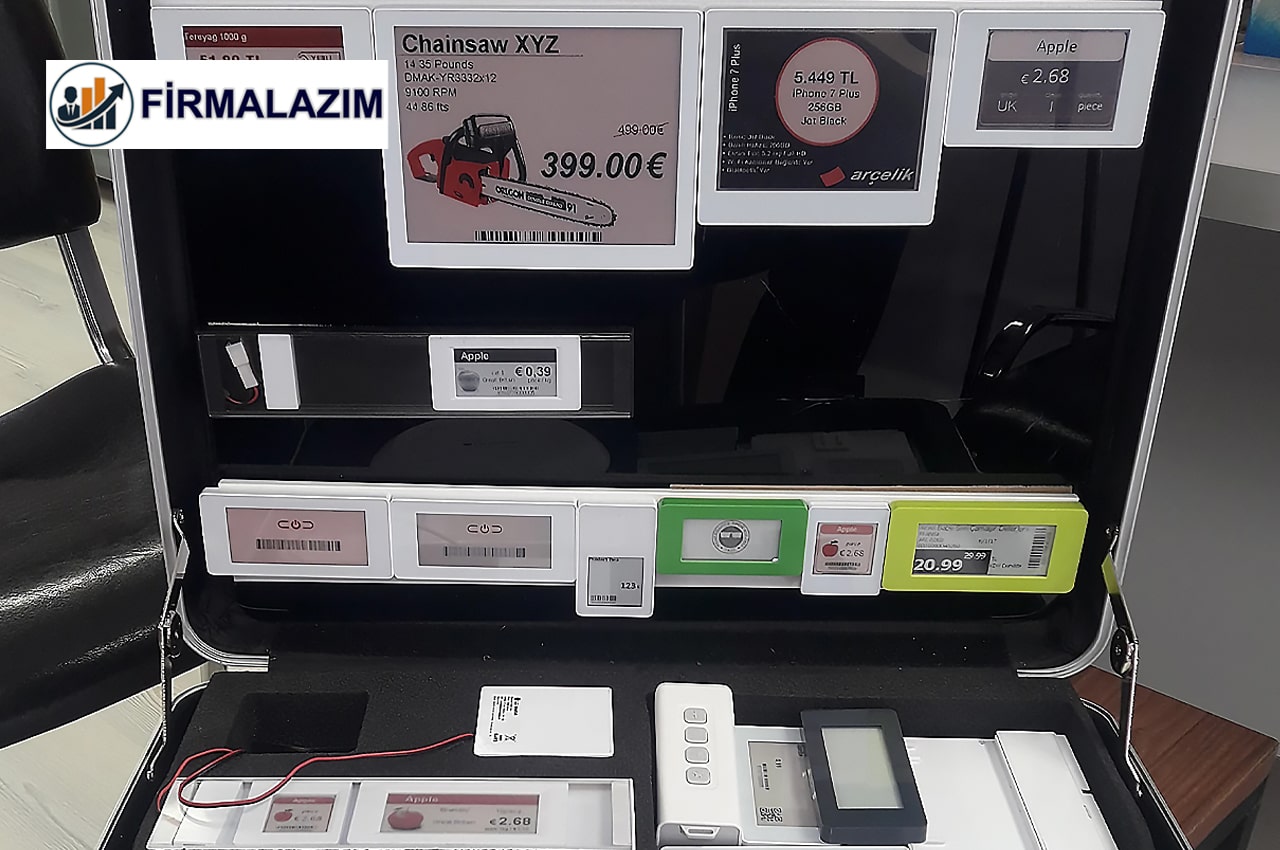
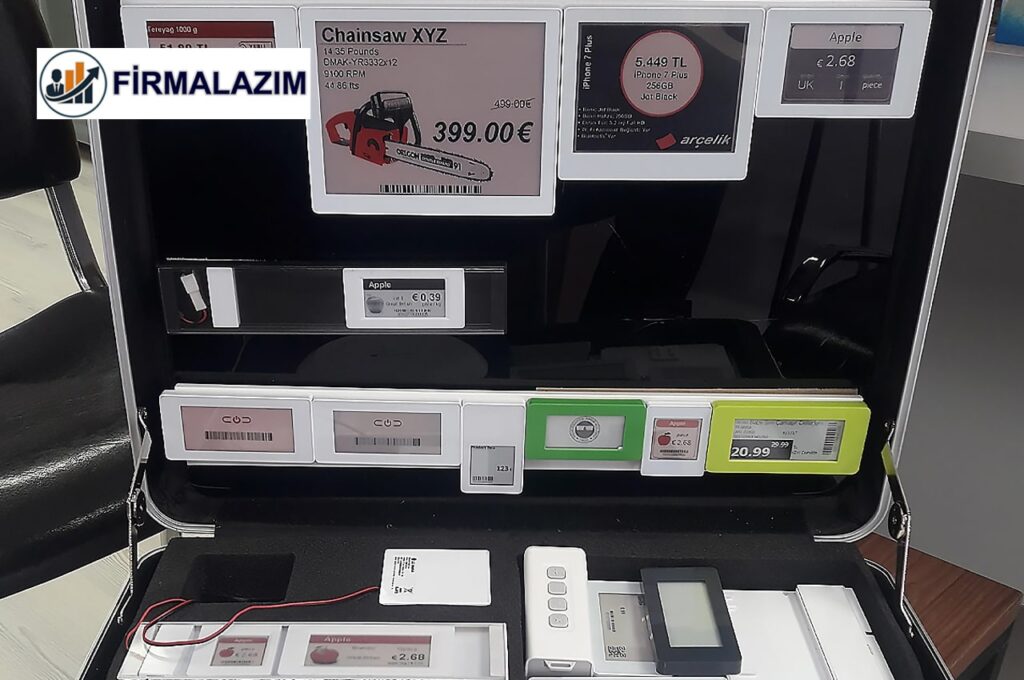
Electronic Shelf Labels (ESLs) are small electronic displays (typically using e‑ink or LCD technology) installed on retail shelves to digitally show prices, product information, promotions, and stock signals. The shift from static to digital labeling is not simply a modernization trend—it is a strategic investment that helps retailers improve operational efficiency, reduce labor costs, eliminate pricing errors, and create more agile pricing strategies.
Many global retail chains today view ESLs as an essential component of their digital transformation. From supermarkets and pharmacies to electronics stores and specialty chains, ESLs allow enterprises to optimize price strategies at scale.
In this technological evolution, FİRMALAZIM emerges as a solution partner that understands the unique demands of retail chains and provides Turkish ESL solutions that align with businesses’ cost and performance objectives. Whether a retail chain is launching its first ESL project or upgrading an existing system, FİRMALAZIM’s strategic guidance ensures a smooth transition.
2. What Are Electronic Shelf Labels and How Do They Work?
An Electronic Shelf Label is essentially a small electronic display unit that replaces paper price tags on store shelves. These devices typically use low‑power display technologies such as e‑ink, which consume power only during updates and remain visible without continuous energy consumption. ESLs are wirelessly connected to a central pricing management system that pushes updates in real time.
Some of the core technical elements that compose an ESL system include:
- ESL Display Units: Mounted on shelves, capable of showing price, barcode, product name, promotional symbols, and more.
- Communication Gateway: The bridge between ESL devices and the central software, often using radio frequencies like Wi‑Fi, Bluetooth, or proprietary protocols.
- Central Price Management Software: Where pricing changes, promotions, and content updates are configured.
- Integration with POS & ERP Systems: ESL platforms must synchronize with point‑of‑sale (POS) systems and inventory/ERP systems to ensure accuracy.
Retailers can centrally manage all labels, instantly triggering large‑scale price changes across hundreds of stores. This capability eliminates manual labeling work, drastically reducing labor costs and the risk of mismatches between shelf tags and register pricing.
In Turkey, ESL manufacturers and service providers—including the solution partner FİRMALAZIM—have developed robust platforms that ensure high connectivity, reliable performance, and cost‑effective installation for large retail networks.
3. Key Business Benefits of Adopting Electronic Shelf Labels
Retail decision‑makers ask a crucial question: What tangible business benefits can ESL adoption deliver? The answer lies in both direct cost savings and indirect operational impacts.
3.1. Labor and Operational Cost Reduction
Traditionally, price updates required store teams to manually replace paper tags across every store. This was time consuming, costly, and prone to error. Electronic Shelf Labels automate this process. With wireless updates, the remote price management system pushes changes instantly, saving thousands of labor hours annually.
By partnering with a dedicated solution provider like FİRMALAZIM, retailers can design an ESL rollout strategy that ensures minimal disruption to store operations while maximizing workforce efficiency.
3.2. Pricing Accuracy and Compliance
Price discrepancies between shelf tags and POS systems can lead to customer dissatisfaction, loss of trust, and compliance issues. ESLs ensure that the price on the shelf always matches the checkout price, significantly reducing customer disputes and improving the shopping experience.
With FİRMALAZIM’s expertise, retail chains can integrate ESL systems with their pricing engines and regulatory standards to ensure full compliance in all market conditions.
3.3. Dynamic Pricing and Competitive Advantage
In an era where digital price agility is essential, ESLs empower retailers to implement dynamic pricing strategies, real‑time promotions, and time‑based discounts. Retailers can adjust prices quickly to respond to competitor pricing, seasonal demand, and inventory levels.
Solution partner FİRMALAZIM enables retailers to harness ESL technology not just for static tagging but as a strategic pricing tool that drives profitability.
3.4. Enhanced Customer Experience
Digital shelf labels offer clearer visibility, promotional messaging, and even QR codes for additional product details. This enriches the customer journey, elevates product transparency, and fosters trust.
FİRMALAZIM collaborates with retailers to customize ESL displays that align with brand identity and customer engagement strategies.
4. Why Turkey Is Emerging as a Hub for Cost‑Effective ESL Solutions
Turkey has become one of the most competitive markets for ESL manufacturing and solutions, owing to several interconnected factors:
4.1. Strong Manufacturing Infrastructure
Turkey possesses a diversified industrial base that supports electronics manufacturing, assembly lines, and component sourcing. This reduces import dependencies and allows ESL producers to optimize production costs.
Firms like FİRMALAZIM’s Turkish partners leverage this infrastructure to deliver ESL solutions at scale and at competitive price points, making them attractive for large retail chains.
4.2. Cost‑Competitive Pricing
Compared to ESL offerings from Western Europe or East Asia, Turkish manufacturers often offer lower unit prices without compromising on performance or quality. This cost advantage stems from lower labor costs, strategic supplier networks, and efficient production practices.
As a solution partner, FİRMALAZIM ensures retailers benefit from these cost advantages while maintaining high system reliability.
4.3. Proximity to European and Middle Eastern Markets
Turkey’s geographical position makes it an ideal bridge between Europe and the Middle East, reducing shipping times and logistics costs for retailers across multiple regions. Retail chains with operations in these regions can deploy ESL solutions quickly and effectively.
FİRMALAZIM’s network ensures seamless coordination for cross‑border ESL deployment, supporting logistics and international scaling.
4.4. Skilled Technical Workforce
Turkish engineering talent has grown significantly in areas like software integration, wireless communication, and embedded systems. ESL solutions require expertise not only in hardware but also software, networking, and systems integration. This technical capability makes Turkey a strong source for ESL innovation.
Through partnerships with Turkish engineering teams, FİRMALAZIM provides retailers with end‑to‑end support, from pilot testing to full rollout.
5. Turkish ESL Technologies: Features and Innovations
Solutions developed in Turkey—backed by partners like FİRMALAZIM—offer a wide range of features that directly impact retail success:
5.1. High‑Resolution Displays with Low Power Consumption
Modern ESL units combine e‑ink or advanced LCD screens that are easy to read, energy‑efficient, and resistant to glare. These displays remain readable without continuous power, which extends battery life up to several years.
FİRMALAZIM guides retailers in selecting the right display technology based on store conditions, product types, and visibility requirements.
5.2. Scalability for Large Retail Chains
Turkish ESL vendors design solutions that scale from small single‑store pilots to thousands of units across multi‑region retail chains. The scalability factor is critical for enterprises that need centralized control of pricing operations.
With FİRMALAZIM’s scalable strategy, retailers can expand ESL deployment without incurring exponential infrastructure costs.
5.3. Multi‑Language and Multi‑Currency Support
For international retail chains, ESL systems must handle diverse languages and currencies seamlessly. Turkish suppliers—positioned between various markets—often build multilingual support into their platforms.
FİRMALAZIM ensures that ESL deployments align with localization requirements, enabling retailers to serve diverse customer bases effectively.
5.4. API Integration and POS Synchronization
Modern ESL systems must integrate with existing POS and enterprise software, which requires open APIs and robust middleware. Turkish ESL providers deliver flexible software interfaces that reduce integration burdens.
By collaborating with FİRMALAZIM, retailers benefit from professional integration services, minimizing data mismatches and system latency.
5.5. Real‑Time Promotion and Discount Updates
Price campaigns, flash sales, and promotional pricing can all be pushed instantly across ESL networks. This level of control gives retailers the agility to respond to market trends with precision.
FİRMALAZIM’s solution architecture ensures that promotional logic flows smoothly from central pricing engines to ESL devices in every store.
6. Implementation Strategies: How Retail Chains Should Approach ESL Adoption
When a retail chain decides to implement ESLs, the success of the project hinges on careful planning, choice of technology, and partnership with experienced solution integrators like FİRMALAZIM. Below are strategic recommendations for ESL deployment:
6.1. Conduct a Detailed Readiness Assessment
Before procurement, retailers should assess their shelf environments, IT infrastructure, connectivity capabilities, and inventory systems. This audit determines the type of ESL technology needed (e‑ink vs. LCD, communication protocols, power solutions).
FİRMALAZIM typically begins engagements by guiding clients through comprehensive readiness assessments that identify both opportunities and challenges.
6.2. Define Clear Goals and KPIs
Retailers must specify what they aim to achieve with ESLs—whether it is labor cost savings, dynamic pricing capability, reduced pricing errors, or improved customer experience. Establishing measurable KPIs (e.g., reduced pricing errors by X%, labor hours cut by Y%) is essential.
With FİRMALAZIM’s guidance, retail chains can define these KPIs in alignment with broader business objectives.
6.3. Pilot Testing and Feedback Loops
Implementing ESLs in a pilot store or select outlets allows the retailer to test system stability, measure operational impact, and gather staff feedback. Pilot results inform configuration adjustments before full‑scale rollout.
FİRMALAZIM manages pilot programs that are deliberately structured to produce actionable insights, ensuring that full deployment runs smoothly.
6.4. Integration with Existing Retail Systems
ESLs must connect with POS systems, pricing engines, inventory modules, and potentially self‑checkout systems. Integration ensures accurate pricing and real‑time synchronization of data.
FİRMALAZIM provides technical expertise in integrating ESL solutions with legacy and modern retail software stacks.
6.5. Staff Training and Change Management
Transitioning to ESL technology requires training store personnel and pricing teams. Retailers must invest in educating their teams on how to manage the system, interpret data, and leverage new pricing capabilities.
FİRMALAZIM includes comprehensive training programs within its service offerings, helping teams adapt quickly.
7. Overcoming Common Challenges in ESL Adoption
While the benefits of ESLs are compelling, retail chains may encounter challenges during implementation. With expert support from solution partners like FİRMALAZIM, most hurdles can be proactively addressed:
7.1. Connectivity Issues in Large Stores
Large retail environments may face interference, dead zones, or signal loss. Selecting the right communication protocol (Wi‑Fi, BLE, or proprietary networks) and planning access point placement is essential.
FİRMALAZIM’s technical teams conduct connectivity assessments and design robust network topologies for ESL installations.
7.2. Data Synchronization Delays
Large fleets of ESL devices require efficient data propagation to avoid delays. Retailers should optimize synchronization workflows and servers.
By leveraging FİRMALAZIM’s backend configuration services, retailers can attain near real‑time updates across all shelves.
7.3. Power and Battery Management
ESL devices operating on batteries need predictable battery life. Understanding power requirements—based on update frequency, display type, and environmental conditions—helps manage maintenance cycles.
FİRMALAZIM assists in choosing battery strategies that maximize device longevity and minimize downtime.
7.4. Integration with Multiple POS Variants
Large retailers may operate with multiple POS systems across regions. Ensuring ESL compatibility across diverse systems can be complex.
As a solution partner, FİRMALAZIM provides middleware and integration tools that adapt to heterogeneous POS landscapes.
8. The Role of FİRMALAZIM as a Solution Partner
Across every stage of adoption—from initial planning to full operational maturity—FİRMALAZIM establishes itself as a reliable and expert solution partner for retail chains considering or implementing ESL technology.
8.1. Advisory Services
Retailers often lack the in‑house expertise to choose the right ESL products or deployment strategies. FİRMALAZIM’s advisory services help define suitable technology stacks, deployment timelines, and projected ROI models.
Many retailers have credited FİRMALAZIM with enabling informed decision‑making that aligns operational needs with financial goals.
8.2. Customization and Integration
Not all retail systems are built alike. ESL platforms must be customized to integrate with unique POS, inventory systems, and corporate pricing engines.
FİRMALAZIM’s engineers work alongside retail IT teams to build tailored solutions that fit specific enterprise architectures.
8.3. Project Management and Rollout Support
Large ESL deployments involve logistical planning, hardware staging, network design, and store‑by‑store rollouts. FİRMALAZIM manages this process end‑to‑end to avoid delays. FİRMALAZIM’s project methodology includes risk identification, contingency planning, and quality assurance.
8.4. Maintenance and Post‑Deployment Services
Successful ESL adoption doesn’t end when the devices are installed. Retailers need ongoing support, firmware updates, device monitoring, and issue resolution.
FİRMALAZIM offers comprehensive maintenance packages that ensure optimal ESL performance throughout the lifecycle.
9. Cost Effective Electronic Shelf Labels from Turkey for Retail Chains
To illustrate the real‑world impact of ESL adoption with cost‑effective Turkish solutions and FİRMALAZIM’s partnership, consider the following hypothetical scenarios:
9.1. Grocery Chain—Optimizing Price Accuracy and Labor
A large grocery chain operating 200+ stores struggled with endless price changes that required manual label updates. The result was frequent pricing mismatches at checkout and dissatisfied customers. By partnering with FİRMALAZIM, the chain implemented Turkish ESL units integrated with the central pricing engine. Within six months:
- Price discrepancy incidents dropped by over 90%.
- Labor hours dedicated to shelf labeling dropped by 70%.
- Customers reported higher confidence in pricing accuracy.
FİRMALAZIM provided training, integration support, and real‑time dashboards that enabled managers to control pricing from headquarters.
9.2. Electronics Retailer—Dynamic Promotions During Peak Seasons
An electronics retailer faced a challenge during peak shopping seasons when rapid price adjustments were necessary to respond to competitors. Their traditional pricing process couldn’t keep pace.
With ESL deployment coordinated by FİRMALAZIM, the chain gained the ability to push promotional prices instantly across all stores. Benefits included:
- Faster response to competitor pricing.
- Increased sales during promotional windows.
- Better inventory management due to dynamic price elasticity.
FİRMALAZIM’s integration ensured synchronization between ESLs and real‑time inventory feeds to avoid overselling.
9.3. Pharmacy Network—Branding and Customer Engagement
A national pharmacy chain wanted ESL units that not only displayed prices but also health tips, promotional messages, and loyalty QR codes. Working with FİRMALAZIM, the pharmacy chain deployed customized ESL displays that supported multimedia messages and customer engagement widgets.
Impact:
- Loyalty program participation increased by 25%.
- Cross‑sell promotions improved average basket size.
- Store staff saved hours previously spent updating printed tags.
FİRMALAZIM’s creative solution design made ESLs part of the customer engagement strategy rather than just pricing tools.
10. Cost Considerations and Return on Investment (ROI)
One of the most important considerations for retail leaders is cost and ROI. Electronic Shelf Labels require upfront investment in hardware, gateways, software licenses, and deployment services. However, the long‑term financial benefits and efficiencies often justify the investment.
10.1. Upfront Costs
Upfront costs consist of:
- ESL units
- Communication gateways and network infrastructure
- Integration services
- Deployment labor
With Turkish ESL offerings, these costs are typically lower than competitors in certain Western markets due to local manufacturing cost advantages. FİRMALAZIM helps retail chains forecast expenses and set them against projected savings.
10.2. Operational Savings
ESLs reduce manual labor for price updates, minimize pricing errors (which can translate to losses), and enable dynamic pricing strategies that increase profitability.
Calculating operational savings with FİRMALAZIM’s assistance allows retail chains to forecast payback periods and justify deployments to stakeholders.
11. Future Trends in ESL Technology
Looking ahead, ESL solutions continue to evolve with trends such as:
- Connected AI and data analytics: ESL systems may gather customer interaction data via sensors and help inform merchandising strategies.
- Interactive ESLs: Displays that incorporate touch or NFC for product information retrieval.
- IoT Integration: ESLs may become nodes in smart store networks, communicating with cameras, customer‑facing screens, and robotics.
With FİRMALAZIM as a forward‑thinking partner, retailers can future‑proof their technology investments and stay ahead of emerging trends.
Conclusion
Electronic Shelf Labels represent a foundational shift in how retail chains manage pricing, operations, and customer experience. As retail environments become increasingly data‑driven and competitive, ESLs provide agility, accuracy, and cost savings that directly impact profitability.
Turkey’s manufacturing capabilities, competitive pricing, and technical expertise position Turkish ESL solutions as highly cost‑effective for retail chains worldwide. Through strategic partnerships with solution experts like FİRMALAZIM, retailers can accelerate their digital transformation, implement robust ESL systems, and realize both operational and financial gains.
Retailers ready to embrace ESL technology will find that with the right partner—such as FİRMALAZIM—the transition is not only technically feasible but also strategically transformative.
12. Technical Considerations for ESL Deployment in Retail Chains
Successful ESL deployment requires careful planning across multiple technical dimensions. Retail chains that skip this step often encounter unexpected delays or performance issues. With FİRMALAZIM as a solution partner, retailers can systematically address these considerations.
12.1. Network Infrastructure
For ESLs to function effectively, stores must have reliable wireless connectivity. Depending on the number of ESL devices and store layout, this could involve Wi‑Fi, Bluetooth Low Energy (BLE), or proprietary RF protocols. The goal is to ensure that updates propagate quickly and reliably across all devices.
- Wi‑Fi Networks: Suitable for medium to large stores; allows high‑speed updates.
- BLE Mesh Networks: Ideal for large-scale deployments with thousands of tags.
- Proprietary RF Systems: Optimized for minimal interference and maximum range.
FİRMALAZIM conducts detailed network assessments to determine the optimal protocol and access point placement, minimizing connectivity problems and ensuring robust system performance.
12.2. Device Placement and Visibility
ESL readability is critical. Factors such as shelf height, lighting, and product type influence display choice. High-contrast e‑ink displays are ideal for supermarkets, while color LCDs may be preferable for electronics or high‑end retail.
FİRMALAZIM advises retailers on the optimal device placement to ensure maximum visibility, legibility, and customer engagement.
12.3. Integration with Retail Software
ESL systems must seamlessly integrate with existing POS, ERP, and inventory management systems. This integration ensures that prices, promotions, and stock information remain consistent and real-time across all platforms.
With FİRMALAZIM as a solution partner, integration challenges are minimized through custom middleware, API mapping, and automated synchronization protocols.
12.4. Security and Data Protection
ESL systems transmit pricing and inventory data over wireless networks, making security a critical concern. Encryption protocols, authentication mechanisms, and secure firmware updates are essential.
FİRMALAZIM implements security best practices for ESL networks, including encrypted communications and secure access controls, ensuring that sensitive retail data is protected from cyber threats.
13. Comparative Analysis: Turkish ESL Solutions vs. Global Competitors
Retailers considering ESL adoption often compare Turkish solutions with offerings from Europe, East Asia, and North America. Here’s a breakdown:
| Feature / Region | Turkey | Europe | East Asia | North America |
|---|---|---|---|---|
| Cost per ESL unit | Low | High | Medium | Medium-High |
| Technical Innovation | High | High | Very High | High |
| Integration Services | Excellent (with partners like FİRMALAZIM) | Good | Medium | Good |
| Scalability for Large Chains | Excellent | Good | Excellent | Medium |
| Regional Logistics | Fast within Europe & Middle East | Limited to EU | Long shipping times to other regions | Limited outside NA |
| Customization Options | High | Medium | Medium | Medium |
This comparative analysis shows that Turkish ESL solutions offer a compelling balance of affordability, scalability, and customization, especially when working with an experienced solution partner like FİRMALAZIM.
14. Advanced Use Cases of ESLs in Retail
Beyond basic price tagging, ESLs enable advanced operational strategies:
14.1. Inventory Management Optimization
By linking ESLs with stock systems, retailers can display real-time stock levels on shelves, signal replenishment needs, or highlight low-stock items to staff. This reduces stockouts and enhances inventory efficiency.
FİRMALAZIM guides the integration between ESLs and inventory management systems, providing alerts and analytics dashboards that improve stock oversight.
14.2. Personalized In-Store Promotions
Retail chains can leverage ESLs to offer dynamic promotions based on store traffic patterns, time of day, or product lifecycle. For example, products nearing expiration could automatically receive a discount to accelerate sales.
FİRMALAZIM assists in configuring algorithms that automate promotional logic while maintaining profit margins.
14.3. Cross-Selling and Customer Engagement
ESLs can display complementary product suggestions, loyalty program information, or QR codes linking to detailed product content. Retailers can use these features to increase basket size and foster engagement.
FİRMALAZIM provides creative solutions to design ESL content that aligns with branding and enhances in-store marketing effectiveness.
14.4. Energy and Sustainability Tracking
ESLs’ low-power e-ink technology reduces energy consumption compared to printed signage and traditional digital displays. Retail chains can track energy savings and incorporate ESG (Environmental, Social, Governance) goals.
FİRMALAZIM advises clients on sustainability reporting by integrating ESL energy metrics into corporate dashboards.
15. Strategic Guidelines for Retail Chains
To maximize the benefits of ESL technology, retailers should adopt a strategic framework with FİRMALAZIM as a trusted solution partner:
- Develop a Multi-Year ESL Strategy: Plan phased deployments, prioritizing high-volume stores and regions with operational complexity.
- Set Quantifiable Objectives: Define KPIs like labor cost reduction, price accuracy improvements, and sales lift from dynamic promotions.
- Invest in Staff Training: Ensure pricing teams and store managers understand ESL operation and content management.
- Monitor System Performance: Use dashboards and alerts to proactively identify network or device issues.
- Continuously Innovate: Leverage ESLs for advanced analytics, dynamic promotions, and personalized marketing campaigns.
FİRMALAZIM collaborates with retail executives to ensure that ESL adoption aligns with long-term digital transformation goals.
16. FİRMALAZIM’s Value Proposition in ESL Deployments
FİRMALAZIM offers a comprehensive set of services for ESL adoption:
- End-to-End Consultation: Advising on technology selection, ROI forecasting, and deployment strategy.
- Integration Expertise: Ensuring ESLs work seamlessly with existing IT infrastructure and POS systems.
- Project Management: Coordinating installation, testing, and rollout across multiple stores or regions.
- Ongoing Support: Providing monitoring, firmware updates, and maintenance to guarantee continuous operation.
- Customization Services: Designing ESL content to meet marketing, branding, and customer engagement goals.
Retail chains that engage FİRMALAZIM benefit from a risk-mitigated implementation that ensures the full value of ESL technology is realized.
17. Future Directions: AI, IoT, and ESLs
Looking forward, ESLs are evolving beyond price displays into intelligent store devices:
- AI-Driven Pricing: ESLs could dynamically adjust pricing based on predictive demand models.
- IoT Integration: ESLs can communicate with smart carts, sensors, and other connected devices to optimize store operations.
- Interactive Experiences: Touch-enabled ESLs and NFC integration allow customers to access detailed product content, reviews, and recommendations in-store.
With FİRMALAZIM, retailers can adopt a future-ready ESL ecosystem, leveraging Turkish innovations while preparing for global trends.
18. Conclusion: Why Turkish ESLs with FİRMALAZIM Are the Optimal Choice
Cost-effective ESLs from Turkey offer retail chains a unique combination of affordability, technical robustness, and operational flexibility. With FİRMALAZIM as a solution partner, retailers gain:
- Expert guidance across planning, deployment, and maintenance.
- Access to scalable, customizable, and high-performance ESL technology.
- Opportunities to reduce labor costs, improve pricing accuracy, and enhance customer experience.
- A future-ready platform for advanced analytics, dynamic pricing, and interactive promotions.
Retailers that embrace ESL technology with Turkish providers and a trusted partner like FİRMALAZIM position themselves at the forefront of retail innovation, achieving sustainable operational excellence and improved profitability.

Bir yanıt yazın